Bucket: A Complete Guide to Its History, Types, and Uses
The bucket is one of those rare tools that seem ordinary but has silently shaped human civilization. At its most basic level, it is a container designed for carrying, storing, or transporting items — often liquids such as water, but also sand, soil, food, and construction materials. Yet behind this simplicity lies a fascinating history and an endless variety of uses.
Buckets are so universal that almost every culture across the globe has used them in one form or another. They have been carved from wood, hammered from bronze, molded from clay, and, in modern times, mass-produced in steel and plastic. Whether in the hands of an ancient farmer drawing water from a well, a child building sandcastles by the beach, or a construction worker mixing cement, the bucket has always been a tool of practicality and necessity.
The goal of this article is to take you on a journey through the evolution, uses, and cultural meanings of buckets. From ancient ceremonial objects to cutting-edge “smart buckets” of today, we’ll discover why this humble item deserves far more appreciation than it usually receives.
Definition and Key Characteristics of a Bucket
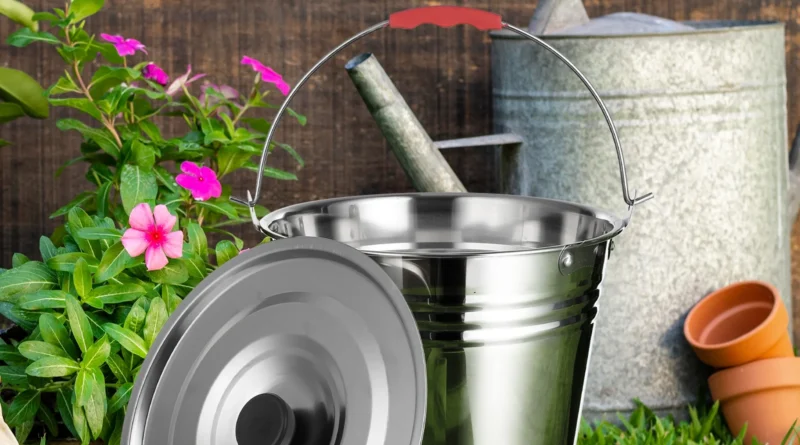
A bucket is generally defined as a container with a flat base, an open top, and an attached handle for carrying. The handle is typically a bail, a curved piece of metal or plastic that facilitates easy transport. The design might look simple, but it’s optimized for functionality.
Key characteristics include:
Shape: Cylindrical or slightly conical, wider at the top than the bottom for stacking and pouring.
Handle: Semicircular, attached near the rim, enabling one-hand carrying.
Capacity: Ranges from less than a liter (toy buckets) to over 20 liters (industrial buckets).
Material: Can be made from wood, leather, bronze, copper, iron, plastic, or stainless steel.
Purpose: Storage, transport, collection, or ceremonial use.
What makes buckets special is that they are multi-purpose by design. Unlike specialized tools that serve a single function, buckets can carry water today, be used as a planter tomorrow, and serve as a storage container the day after.
The History of Buckets: From Ancient Civilizations to Modern Times
The history of buckets is a mirror of human ingenuity. Early humans likely used animal hides stitched together to form pouches for carrying water. As societies advanced, buckets became more durable and symbolic.
Ancient Egypt and Mesopotamia: Buckets were often made of bronze or clay and used in irrigation, religious ceremonies, and construction projects. Archaeological evidence shows decorated buckets used by priests.
Greek and Roman Empires: Romans used metal and wooden buckets in both homes and baths. Firefighters in Rome carried water in leather buckets.
Medieval Europe: Wooden buckets bound with iron hoops became standard, especially for carrying well water. The “bucket chain” method — where villagers passed buckets along to fight fires — was common.
19th Century: With the Industrial Revolution, buckets evolved into iron and galvanized steel versions. They became essential in mining and construction.
20th Century to Today: Plastic buckets revolutionized household chores, agriculture, and industry. Modern innovations now include collapsible silicone buckets and digitally monitored smart buckets for precise water management.
The story of buckets is really the story of how humans have always needed simple yet reliable tools for survival and progress.
Types of Buckets and Their Specific Purposes
Water Buckets
Water buckets are perhaps the most traditional type. Used to draw water from wells, rivers, or tanks, they have been part of every household throughout history. Even today, rural areas around the world rely on simple metal or plastic water buckets for daily living.
Household and Garden Buckets
Households use buckets for cleaning, mopping, laundry, and general storage. Gardeners rely on them for carrying soil, compost, fertilizer, or freshly picked vegetables.
Ceremonial Buckets (Situla)
In ancient times, situlae (Latin for bucket) were elaborately decorated vessels used in religious rituals. Many situlae discovered in Europe and the Middle East are engraved with images of gods, animals, and ceremonial scenes.
Industrial Buckets (Construction & Mining)
These are heavy-duty buckets designed to carry cement, sand, ore, and rocks. Some industrial buckets are attached to excavators, cranes, or conveyor belts in large-scale projects.
Toy Buckets
Children love toy buckets, especially at the beach. These small plastic containers, often brightly colored, are part of childhood memories worldwide.
Special Buckets for High-Temperature Use
Certain buckets are designed to withstand fire, molten materials, or chemical exposure. Firefighting sand buckets (conical in shape) are one famous example.
Materials Used in Making Buckets
Buckets can be made from almost anything durable.
Wood: Traditional, used in wells and households.
Leather: Flexible and portable in ancient times.
Bronze and Copper: Strong, decorative, and often ceremonial.
Iron and Steel: Industrial-grade, corrosion-resistant when galvanized.
Plastic: Lightweight, cheap, mass-produced, and most common today.
Silicone: Modern collapsible designs, perfect for campers and travelers.
Each material reflects the era and purpose it served.
Everyday Uses of Buckets in Homes and Gardens
Buckets are deeply woven into daily routines. In homes, they are used for:
Storing water for cleaning or emergencies.
Washing clothes by hand.
Mixing detergents or cleaning solutions.
Collecting rainwater.
Holding household items like tools, toys, or food grains.
In gardens, buckets help with:
Transporting soil and compost.
Watering plants.
Acting as makeshift planters.
Collecting weeds or harvesting produce.
The versatility of buckets is why they are found in nearly every household worldwide.
Buckets in Agriculture and Construction
In agriculture, buckets are used for carrying seeds, fertilizers, and animal feed. Farmers also repurpose buckets for irrigation or storing harvested crops.
In construction, industrial-grade buckets play a massive role. Excavator buckets dig foundations, while cement buckets transport building material. Without buckets, modern construction would slow to a crawl.
Innovative Uses: From DIY Projects to Food Storage
Buckets are also central to creative problem-solving.
DIY enthusiasts use buckets as stools, storage bins, or organizers.
Fishermen use buckets for bait storage or even makeshift aquariums.
Food industries rely on food-grade plastic buckets for transporting bulk items like flour, sauces, or pickles.
Emergency kits often include buckets for carrying supplies, washing, or even serving as toilets during disasters.
Symbolism of Buckets in Culture and Language
Buckets are not just tools; they are symbols.
“Kick the bucket” means to die.
“Drop in the bucket” refers to something too small to matter.
Buckets also appear in literature, art, and religious symbolism — representing sustenance, sacrifice, or abundance.
Modern Design Innovations and Smart Buckets
Technology has not ignored buckets.
Collapsible silicone buckets are popular among campers.
Smart buckets now monitor water levels using sensors.
Industrial buckets are engineered with hydraulic grips and wear-resistant materials for efficiency.
Even a simple tool like a bucket evolves with modern needs.
Difference Between a Bucket and a Pail
Although often used interchangeably, some differences exist:
A bucket is usually larger, more robust, and used for heavier tasks.
A pail often refers to smaller containers, sometimes with lids, often for food or milk.
Environmental Impact and Sustainable Bucket Materials
Plastic buckets, while useful, pose environmental challenges. Millions are discarded every year, adding to plastic waste.
Sustainable alternatives include:
Bamboo fiber buckets
Recyclable metal buckets
Biodegradable plastics
The future of buckets lies in balancing functionality with eco-friendliness.
Fun Facts About Buckets
The world’s largest bucket is displayed in Illinois, USA, and can hold thousands of gallons.
Firefighting sand buckets are traditionally conical, so they cannot be set down and forgotten.
In medieval times, stealing a bucket was serious — the “War of the Oaken Bucket” in 1325 started over one stolen bucket!
Conclusion
The bucket is proof that the simplest tools often have the most profound impact on human history. From ancient situlae to modern industrial buckets, this container has carried water, grain, soil, and even symbolic meaning for thousands of years.
Whether made of wood, metal, or plastic, the bucket continues to serve homes, industries, and cultures. Its versatility, durability, and adaptability ensure that no matter how advanced technology becomes, the bucket will never lose its relevance.
FAQs
Q1: What is the main use of a bucket?
Buckets are mainly used for carrying and storing liquids or loose materials like water, sand, soil, or food.
Q2: Who invented the bucket?
There is no single inventor; buckets evolved naturally in different civilizations. Early versions were made from hides, wood, or bronze.
Q3: What’s the difference between a bucket and a pail?
Buckets are generally larger and sturdier, while pails are smaller and often used for milk or food storage.
Q4: Can buckets be recycled?
Yes. Metal and some plastics can be recycled. However, cheap plastic buckets often end up in landfills, making sustainable alternatives more important.
Q5: What are smart buckets?
Smart buckets are modern designs equipped with sensors that monitor water levels or temperature, mostly used in agriculture and industry.